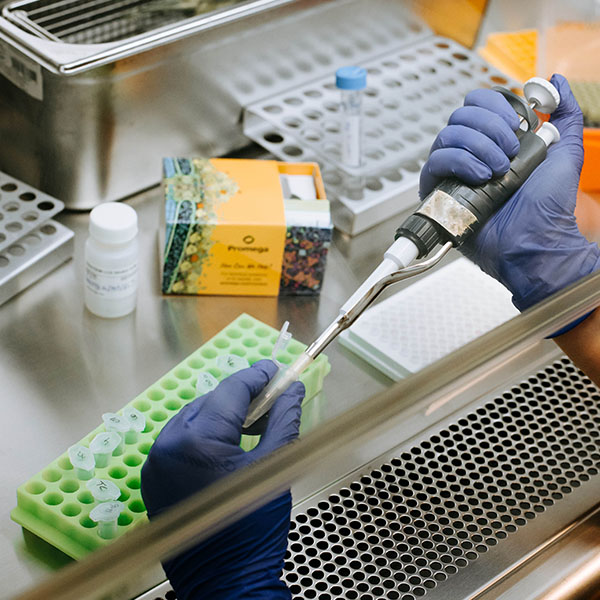
Protein Labeling
Whether you are looking for secondary antibody substrates and detection systems for Western blotting or want to add a non-radioactive label to your protein during translation, we have an array of products for your protein analysis needs. Browse the HaloTag® technology products to find reagents and systems for creating fusion proteins to use with cell imaging, protein localization, purification and protein interactions. You will find more than just the basics for labeling and detecting proteins for your proteomic investigations.
26
Filter By
Applications
Accessory Reagents
Shop all Protein Labeling and Detection
Showing 26 of 26 Products

Why Label and Detect Proteins?
Labeling and detecting proteins is integral to protein analysis. By incorporating an amino acid with a colorimetric or fluorescent moiety during in vitro translation, you can label a protein for further study. For example, adding a nonradioactive label when using a cell-free expression system means you can detect your labeled protein on a gel rather than a membrane. You can also label proteins using a peptide tag. Once you have fused your protein with a tag at the C or N terminus, you can further analyze protein function. Not only can you purify your tagged protein, you can also use the tag for antibody-based detection (e.g., Western blotting), pull-down assays and more. Determining how well your protein was expressed during translation or where your protein resides in the cell is helpful for you to understand what role the protein plays. Labeling a protein is only the first step. Detection systems help you figure out where, how much and what role the protein plays in the cell.